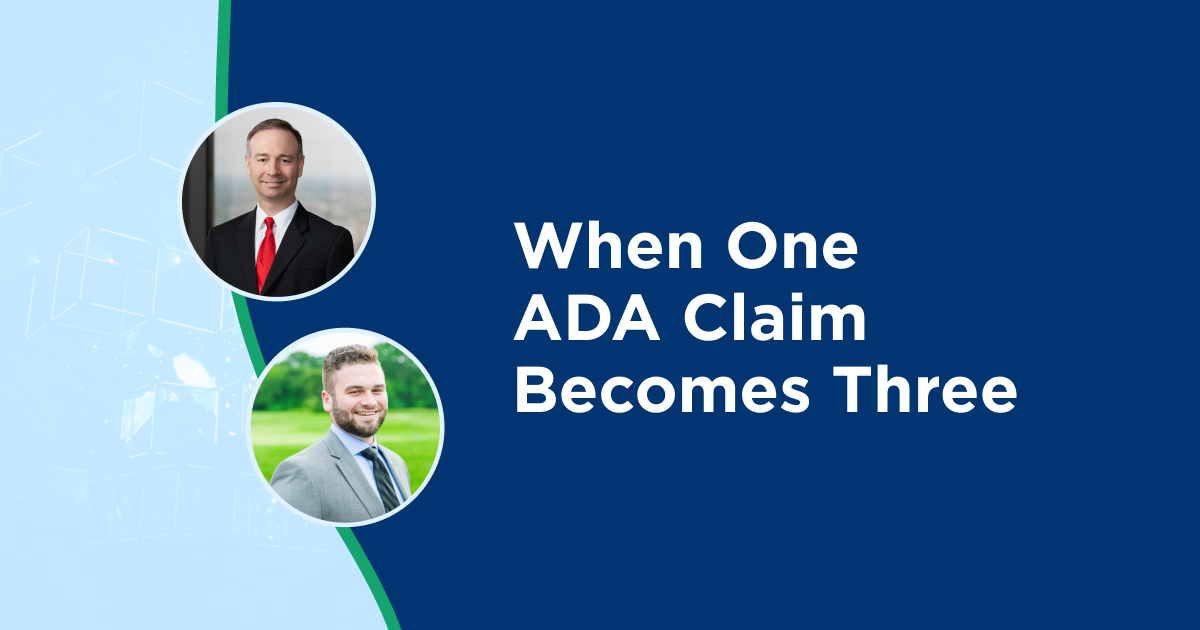
A conversation with Ted Hollis, Partner at Quarles & Brady,
as part of the Notes from the Field series.
Most companies treat an ADA website accessibility claim as a contained event. A demand letter comes in, it gets resolved, and the assumption is that the issue has been handled.
That’s not how Ted described it.
What he sees, over and over again, is that the first claim doesn’t close the loop. It opens it.
Multiple Claims Can Arrive Faster than Expected
Early in our conversation, Ted shared an example that stuck with me.
“Three different lawsuits and/or demand letters… all within the scope of two months.”
Three firms. Two months.
That’s not bad luck. That’s a pattern.

Watch Ted explain why companies that have already been targeted often face repeat accessibility lawsuits—and how patterns in filings drive that risk.
What the First Claim Signals
I asked Ted directly why this happens—why one claim turns into several.
His answer was straightforward: visibility.
“I suspect these plaintiff’s firms are perhaps monitoring each other’s dockets… If one firm sees that somebody’s been hit with a claim, they’ll have their plaintiff go to the website and see if they have any issues.”
The first claim doesn’t just raise a legal issue. It signals that the site is worth checking.
And if the same barriers are still there, the next claim is already in motion.
Why Settling One Claim Doesn’t Prevent the Next
Resolving the first case doesn’t change what comes next.
“Three separate valid claims.”
Each plaintiff is bringing their own experience, so each claim stands on its own, regardless of what’s already been settled.
From Ted’s perspective, that’s why the response to the first claim matters so much. If there are real accessibility barriers, the only way to reduce follow-on exposure is to address them—and to do it quickly.

Watch Ted explain why multiple accessibility claims can all be valid—and why fast remediation is the strongest defense against repeat filings.
Where Companies Create Their Own Exposure
One of the subtler risks Ted pointed out is timing.
Most settlements allow a remediation window. On paper, that sounds reasonable. In practice, it creates a gap—because during that window, the issues are still live.
“Grab the bull by the horns… get that remediation done as soon as feasibly possible.”
Why This Doesn’t End After One Fix
Later in the conversation, Ted shared an example that reframes this entirely.
A company resolved a claim, completed the required remediation, and moved on. Years later, plaintiff’s counsel came back with new issues.
Not because the original fix was wrong—but because the site had changed.
“That just highlights the importance of keeping on top of this… it’s not a one-time and done thing.”
That’s the part that’s easy to miss. Accessibility isn’t static, and neither is exposure. This point was also made by Minh Vu, another lawyer I spoke with for this series.

Watch Ted explain why most accessibility claims target companies more than once—and why ongoing monitoring, not one-time fixes, is critical to reducing risk.
Closing
The pattern Ted described isn’t about a single lawsuit. It’s about what happens after a company becomes visible.
Once that happens, the timeline compresses, scrutiny increases, and the margin for error narrows.
The question isn’t just how to resolve the first claim.
It’s whether you’re set up to avoid the second.
Explore more insights in my Notes from the Field series.
If you’re evaluating how to move from reactive fixes to a more sustainable approach, we’re happy to share what that looks like in practice
This post is based on a conversation with Edward Hollis, part of the Notes from the Field series. Content reflects his professional perspective. It does not constitute legal advice.