The first half of 2026 produced the highest volume of digital accessibility lawsuits we have ever tracked, and the numbers tell a clear story about where this litigation is going. Here is what stands out at the midyear mark, and what it means for the companies most exposed.
Download the 2026 Midyear Lawsuit Report
The data I referenced here is from UsableNet's 2026 Midyear report on web accessibility. This article highlights key patterns, but the full report includes detailed charts, state-by-state breakdowns, industry analysis, and methodology based on thousands of filings reviewed by the UsableNet research team.
Lawsuits Are Climbing and Moving to New Venues
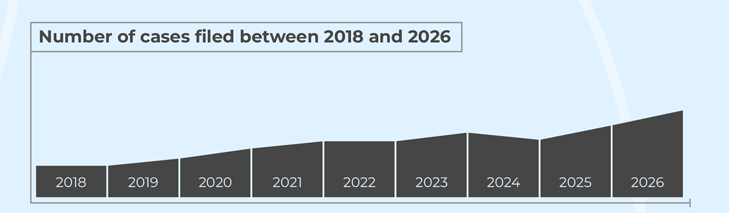
At the current pace, website accessibility lawsuits are on track to surpass 6,000 in 2026, a historic high and a nearly 20% increase over 2025. The spike follows a familiar pattern: when federal enforcement slows, through delays to Title II and limited DOJ involvement, private plaintiffs step in to fill the gap.
What stands out this year is where those cases are landing. Illinois has emerged as a significant hotbed of federal cases, and filings continue to shift toward state courts in California, New York, and Florida, where courts often offer more favorable conditions for applying the ADA to websites. Together, these moves are driving the overall surge.
A subtler trend is also emerging at the judicial level. Some judges are granting defendants limited room to argue mootness: essentially, the claim that a lawsuit no longer applies because the defendant has remediated the accessibility issues. Wins on these grounds remain few and far between. The pattern likely reflects judicial fatigue more than any deliberate effort to establish precedent, as the sheer volume of ADA filings increasingly overwhelms the courts.
New York Still Leads, but Illinois Is the Story
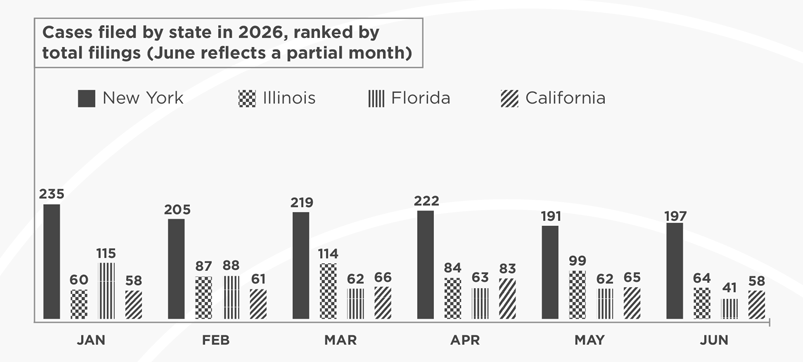
New York continues to lead in total filings, with plaintiffs increasingly favoring state court over federal, consistent with the broader shift toward state jurisdictions that offer friendlier conditions for ADA website claims.
But the standout story of 2026 is Illinois. Once a second-tier jurisdiction, it has climbed into the ranks of the most active states this year, a sign that plaintiffs and their attorneys are expanding their geographic strategy well beyond the traditional strongholds. Florida continues its own upward trajectory, particularly at the federal level, where it remains the most active federal jurisdiction for website accessibility claims. California, still a major player, mirrors the state-court-first approach now common across the top filing states.
The Firms Behind the Surge
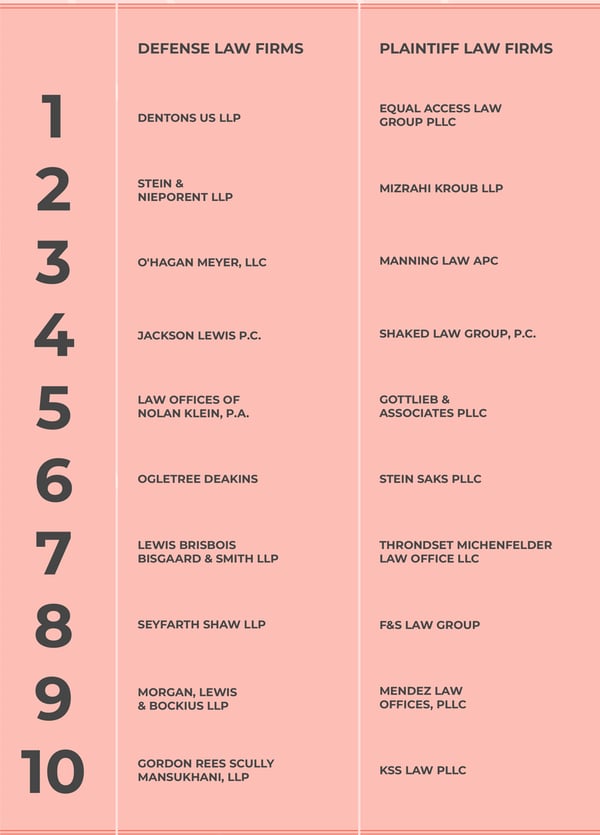
On the defense side, the top ten remains a story of continuity. Dentons reclaimed the top position in 2026, and firms like Stein & Nieporent LLP continue to appear as trusted, go-to defenders, shifting in rank from year to year but never far from the top. For companies facing ADA claims, these firms represent institutional knowledge they have built case by case over years.
The plaintiff side tells a different story, and one firm tells most of it. Equal Access Law Group PLLC, based in Illinois, has emerged as the single biggest driver of 2026's filing surge. Its activity alone goes a long way toward explaining both the jump in overall case numbers and Illinois's sudden rise as a hotspot. Some have labeled the firm a repeat filer, but that framing misses the point. Equal Access represents more than a dozen individual plaintiffs, and any one of them can encounter multiple inaccessible websites in a single month. Barriers are that common.
These cases are not going away. The ADA demands equal access, and as long as companies deprioritize accessibility, they stay at risk. Equal Access has found a well-stocked field, and it is not alone. New plaintiff firms keep entering the space for the same reason: inaccessible websites are everywhere, and the law is clear.
The Same Sectors, Year After Year
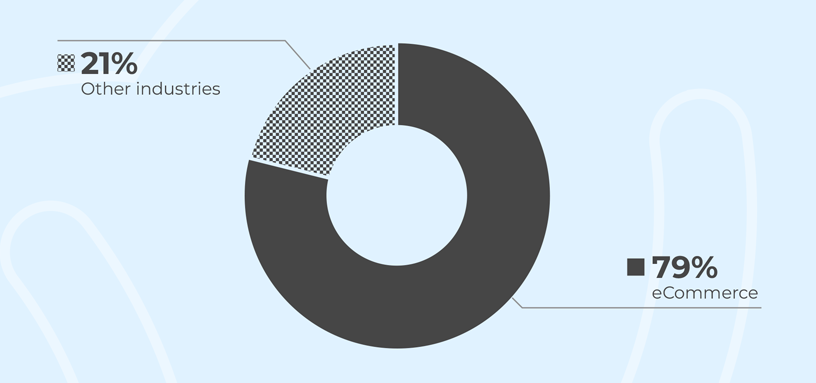
The industries that website accessibility lawsuits target most haven't changed much, and that consistency is itself the headline. E-commerce and food and beverage services continue to dominate filings, not because plaintiffs are repetitive but because these sectors sit at the intersection of commercial necessity and digital dependency. They are where the ADA's original vision of public accommodation meets everyday life online.
The law rests on a simple idea: businesses that offer goods and services to the public carry an obligation to everyone, regardless of ability. As commerce has migrated online, so has that obligation. For users who are blind, low-vision, or otherwise disabled, an inaccessible checkout page or restaurant ordering platform isn't an inconvenience; it's a barrier to participation. The persistence of these sectors at the top of the charts suggests that meaningful remediation, at scale, has yet to happen. Lawsuits are not cycling through new targets; they are returning to the same ones.
A Familiar Playbook That Targets Bigger Companies
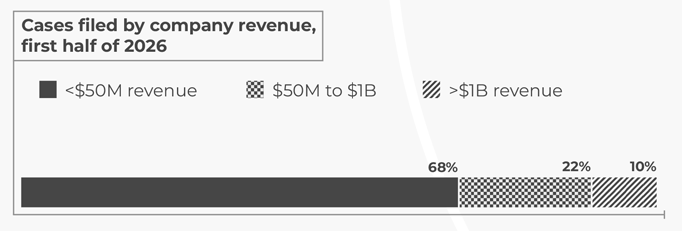
As new plaintiff firms enter the space, they tend to follow a predictable playbook: start with the largest, most recognizable companies. The result is a steady creep upmarket. In the first half of 2026, 36% of sued companies had annual revenue exceeding $25 million, up from 33% in 2024 and 27% in 2023.
This isn't necessarily a sign that the legal landscape is maturing or that firms are making more sophisticated targeting decisions. It may simply reflect how firms new to the space behave: larger companies are easier to find, more likely to settle, and seem better positioned to remediate. The economics are straightforward. Smaller companies haven't escaped. They remain frequent targets, but their share of total filings continues to shrink as more firms aim higher up the revenue ladder.
Why Widgets Don't Stop Lawsuits
Accessibility widgets have become one of the more consequential myths in digital compliance. Vendors have poured marketing dollars into selling them to a broad market of companies that know little about accessibility and are understandably looking for a simple, low-cost fix. The pitch is appealing. The reality is not.
Widgets may handle surface-level adjustments like tweaking contrast, resizing fonts, or patching the occasional alt tag. But they cannot address what actually matters in a lawsuit: whether a real user with a screen reader can navigate and use the site. Fixing that means repairing the interactions and functionality that are actually broken, and plaintiff firms know exactly where to look. The functional barriers that end up in claims sit entirely beyond what a widget can touch: an inaccessible checkout flow, a form a screen reader cannot complete, navigation that breaks without a mouse.
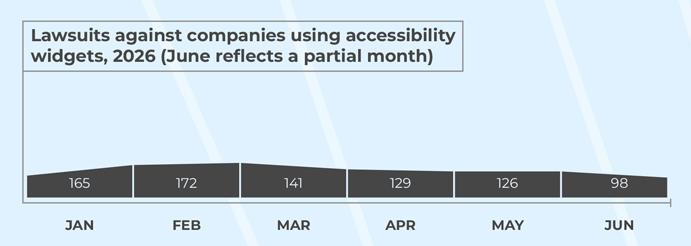
The numbers bear this out. Lawsuits against companies already using accessibility widgets continue to rise; the presence of a widget has not proven to be a meaningful deterrent, legally or practically. There is also an active harm. Many widgets inject overlays or control panels that interfere with screen reader navigation, creating new barriers for the very users they claim to serve. For someone who relies on assistive technology, an inaccessible site with a widget is often harder to use than one without.
Widgets cost little to build and do little to help, which is precisely why vendors can sell them at scale to companies that don't yet know the difference. Until those companies fix the interactions and functionality that are actually broken, they stay at risk. A widget on the page is not a defense. It never was.
What This Means
The throughline of the 2026 midyear data is consistency: the same sectors, the same kinds of barriers, and a growing roster of firms that have figured out how common those barriers are. The companies that treat accessibility as real engineering work, not a widget or a checkbox, are the ones that will stay out of this report next year.
To see where your own site stands against the latest standard (WCAG 2.2), start with a free automated scan using UsableNet AQA, or talk with an accessibility expert at usablenet.com/contact.